
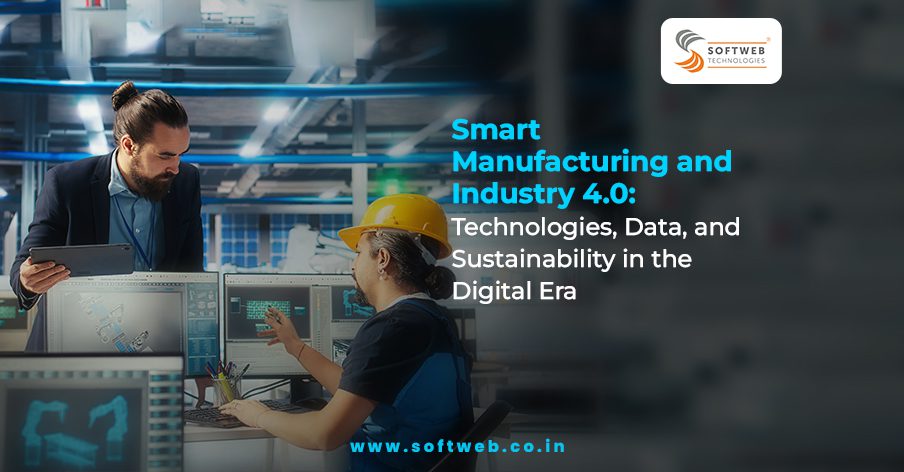
Previously, we demystified digital transformation, showing how strategy, culture, and technology work together to future-proof businesses. We also explored the frameworks and game-changing trends of 2025 that guide digital adoption across industries.
Now, we turn our focus to manufacturing — the heartbeat of Industry 4.0 and a prime example of how digital transformation is reshaping operations. From cyber-physical systems and IoT-enabled smart factories to predictive maintenance, digital twins, and sustainable supply chains, manufacturing is becoming smarter, faster, and more sustainable.
Foundations of Smart Manufacturing
Evolution of Manufacturing Systems
Manufacturing has always evolved alongside technology — from the age of mechanisation to assembly lines and automation. But today, we are in the midst of Industry 4.0, where the fusion of digital and physical systems is transforming factories into intelligent, connected ecosystems.
Manufacturing Digital Transformation
Smart manufacturing goes beyond automation — it’s about creating cyber-physical systems (CPS) that integrate machines, sensors, software, and humans into one connected value chain. Key concepts include:
- Industry 4.0 → Digital-first factories with IoT and AI.
- CPS → Physical equipment seamlessly linked with digital monitoring and control.
- Horizontal & Vertical Integration → Breaking silos across functions and supply chains.
Advanced Manufacturing Systems
The shift is towards flexibility and agility:
- Reconfigurable and Flexible Manufacturing Systems → Adapt to new product designs faster.
- Lean and Agile Manufacturing → Reduce waste, increase responsiveness.
- Smart Manufacturing → Use real-time data to optimise production and enhance decision-making.
Industry 4.0 Enabling Technologies
Smart manufacturing is powered by an ecosystem of digital technologies:
- IoT & IIoT (Industrial Internet of Things): Sensors and connected devices track equipment performance, energy use, and supply chain logistics in real time.
- Artificial Intelligence & Machine Learning: AI-driven analytics predict demand, optimise scheduling, and enable predictive quality control.
- Robotics & Autonomous Systems: From assembly-line robots to autonomous material-handling vehicles, robotics enhances speed and precision.
- Additive Manufacturing (3D Printing): Enables rapid prototyping and localised production, reducing costs and waste.
- Cloud & Edge Computing: Scalable infrastructure ensures real-time monitoring, control, and analytics.
- Augmented Reality (AR) & Virtual Reality (VR): Transform training, maintenance, and design with immersive visualisation.
Together, these technologies form the backbone of the digital factory of the future.
Data-Driven Manufacturing System Modelling and Analysis
Data is the new oil of manufacturing, and smart factories thrive on real-time insights.
- Fundamental Process Metrics: Cycle times, throughput, and downtime analytics enable better decision-making.
- Queuing Theory: Optimises workflows and reduces bottlenecks in production lines.
- Predictive Maintenance & Quality Control: IoT sensors and AI algorithms forecast equipment failures, reducing downtime and maintenance costs.
- Digital Twins & Simulation Modelling: Virtual replicas of machines and processes allow testing before execution.
- Manufacturing Execution Systems (MES): Integrate shop-floor operations with enterprise systems for end-to-end visibility.
Enabling Infrastructure
Smart manufacturing requires not just technology but also infrastructure, governance, and readiness.
- Cybersecurity: Protects connected devices, data, and supply chains from increasing cyber risks.
- Change Management & Workforce Readiness: Training workers to adopt digital tools and embrace agile ways of working.
- Governance, Ethics & Risk Management: Ensures responsible use of AI, data, and automation.
- Diagnostics & Technology Maturity Models: Help manufacturers assess digital readiness.
- Technology Road Mapping: Provides structured plans to scale Industry 4.0 adoption.
Supply Chain and Sustainability
No factory operates in isolation — the future of manufacturing is tied to digital supply chains and sustainable operations.
- Digital Supply Chains: End-to-end visibility and real-time data improve agility, reduce disruptions, and optimise logistics.
- Blockchain Applications: Provide secure, transparent supply chain tracking, reducing fraud and ensuring authenticity.
- Sustainable Manufacturing: IoT-driven energy monitoring, waste reduction, and circular economy models drive ESG compliance.
- Smart Sourcing: AI and analytics improve supplier selection and resource optimisation.
Smart manufacturing is the practical face of Industry 4.0. By combining cyber-physical systems, IoT, AI, robotics, and data-driven insights, businesses can create factories that are not only more efficient but also more resilient and sustainable and ready for value creation.

Unmanned Weighbridge System: How RFID, ANPR and Sensors Run the Weighbridge Without an Operator
The modern-day retail stores, post-pandemic, have been facing new challenges in terms of bringing back [...]
Oct
Facial Recognition and AI Video Analytics for Retail Stores: A Practical Guide
The modern-day retail stores, post-pandemic, have been facing new challenges in terms of bringing back [...]
Oct
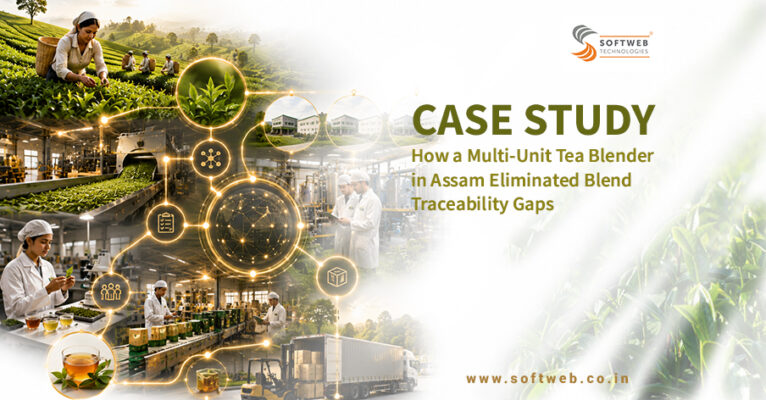
How a Multi-Unit Tea Blender in Assam Eliminated Blend Traceability Gaps with PACE360 ERP
A leading tea blending company in Assam adopted PACE360 to unify procurement, blending, warehouse management, [...]
Jun
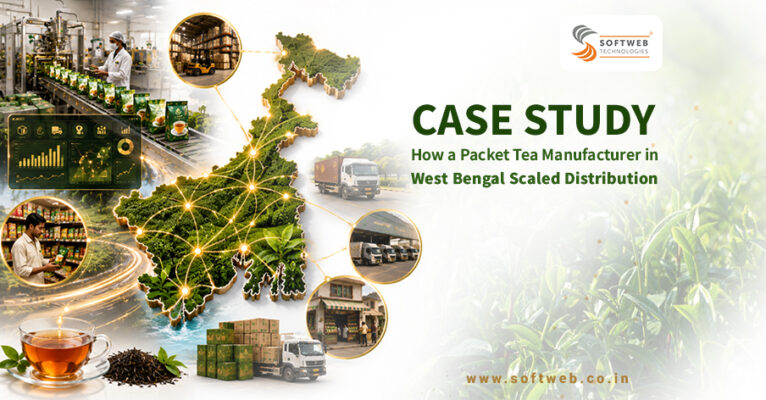
How a Packet Tea Manufacturer in West Bengal Scaled Distribution with PACE360 ERP
See how a leading yarn manufacturer moved beyond traditional procure-to-pay software to CVSS — Softweb’s [...]
Jun
The Future of Coal Supply Chain Management Through Automation & Innovation
See how a leading yarn manufacturer moved beyond traditional procure-to-pay software to CVSS — Softweb’s [...]
Jun
Beyond Procure-to-Pay: How a Leading Yarn Manufacturer Upgraded to CVSS and Cut Procurement Lead Time by 60%
See how a leading yarn manufacturer moved beyond traditional procure-to-pay software to CVSS — Softweb’s [...]
May
Beyond Fleet Tracking: Why Smart Iron Ore Mining Will Shape the Future of India’s Steel Industry
Discover how MiningPro by Softweb Technologies enables smarter, connected, and data-driven smart iron ore mining [...]
May

Blueeye in Kenya: Mara Coffee’s Digital Transformation Strategy for Multi-Farm Workforce Management
Mara Coffee, Kenya is transforming plantation workforce management through digital attendance tracking, productivity monitoring, payroll [...]
May
