
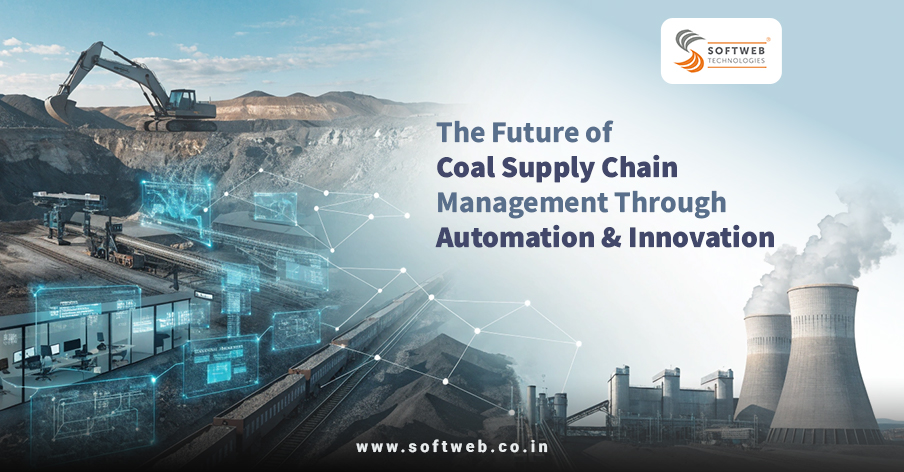
India’s coal sector is still the backbone of its power generation, steel, and cement industries – but the way that coal actually moves from pit to plant has not kept pace with the scale of demand for it. We’ve already looked at why the Indian coal supply chain urgently needs modernisation: ageing infrastructure, grade discrepancies, and a supply-demand gap that keeps widening. This piece picks up where that conversation leaves off and answers a more operational question – how, exactly, does a coal company go from a fragmented, paperwork-heavy dispatch process to a connected, automated, and data-driven supply chain?
The answer is a stack of automation technologies – working together at the mine gate, on the road, at the railway siding, and inside the ERP – that together turn coal logistics from a reactive scramble into a managed, measurable process.
The Pit-to-Plant Reality: Where Coal Logistics Actually Breaks Down
Walk through a typical day at an open-cast coal mine or an MDO (Mine Developer-cum-Operator) site serving Coal India Limited subsidiaries, and the friction points are easy to spot.
A loaded truck queues at the weighbridge because slot allocation is still done over phone calls.
A transporter’s vehicle sits idle at the gate because the security register is a physical logbook.
A consignment is ready to move, but the transit permit and e-way bill are stuck in someone’s inbox waiting for manual entry into the ERP.
Meanwhile, the plant receiving the coal has no visibility into what’s actually en route, so it can’t plan unloading or blending.
They’re the everyday cost of running a multi-stakeholder, multimodal supply chain (road, rail siding, sometimes barge) on manual coordination. Individually, each delay looks small. Added up across hundreds of vehicles and dozens of rakes, they translate into longer truck turnaround time (TAT), idle fleet capacity, inventory mismatches between mine-end and plant-end stock registers, and compliance teams permanently playing catch-up.
From Fragmented Systems to a Connected Operating Model
The shift that’s now underway across Indian coal operations isn’t just digitisation – it’s the move from a set of disconnected tools to a single connected operating model. This is the principle behind platforms like TransMINEX, Softweb’s logistics management platform for coal, metal, and mining companies: dispatch planning, vehicle tagging, weighbridge data, siding and rake management, and permit tracking all sit on one system, instead of living in five different places.
It’s operational intelligence: knowing, at any given moment, how much coal is at the pit-head, how many vehicles are loaded and moving, which rakes are forming at the siding, and which dispatches are at risk of missing their compliance window.
1. Dispatch & Logistics Automation
2. GPS, IoT & Surveillance-Based Vehicle Tracking
3. RFID & Smart Gate Automation
4. ERP Integration
5. RPA-Based Compliance Automation
6. Real-Time Dashboards & Operational Intelligence
What This Actually Changes on the Ground
The Road Ahead: Connected, Predictive Coal Logistics
How Softweb Supports This with TransMINEX

Unmanned Weighbridge System: How RFID, ANPR and Sensors Run the Weighbridge Without an Operator
The modern-day retail stores, post-pandemic, have been facing new challenges in terms of bringing back [...]
Oct
Facial Recognition and AI Video Analytics for Retail Stores: A Practical Guide
The modern-day retail stores, post-pandemic, have been facing new challenges in terms of bringing back [...]
Oct

How a Multi-Unit Tea Blender in Assam Eliminated Blend Traceability Gaps with PACE360 ERP
A leading tea blending company in Assam adopted PACE360 to unify procurement, blending, warehouse management, [...]
Jun
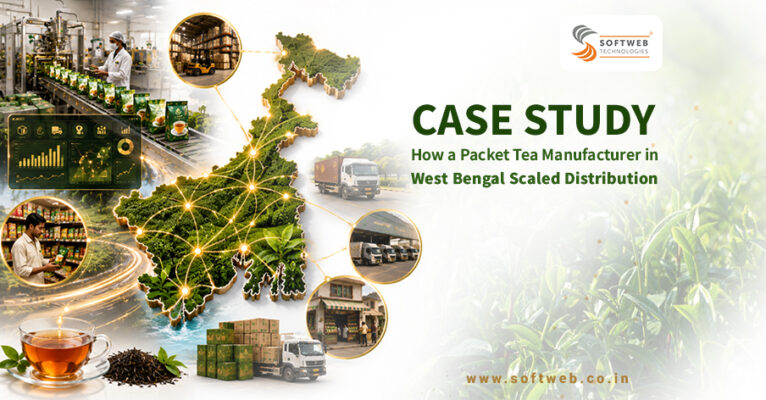
How a Packet Tea Manufacturer in West Bengal Scaled Distribution with PACE360 ERP
See how a leading yarn manufacturer moved beyond traditional procure-to-pay software to CVSS — Softweb’s [...]
Jun
The Future of Coal Supply Chain Management Through Automation & Innovation
See how a leading yarn manufacturer moved beyond traditional procure-to-pay software to CVSS — Softweb’s [...]
Jun
Beyond Procure-to-Pay: How a Leading Yarn Manufacturer Upgraded to CVSS and Cut Procurement Lead Time by 60%
See how a leading yarn manufacturer moved beyond traditional procure-to-pay software to CVSS — Softweb’s [...]
May
Beyond Fleet Tracking: Why Smart Iron Ore Mining Will Shape the Future of India’s Steel Industry
Discover how MiningPro by Softweb Technologies enables smarter, connected, and data-driven smart iron ore mining [...]
May

Blueeye in Kenya: Mara Coffee’s Digital Transformation Strategy for Multi-Farm Workforce Management
Mara Coffee, Kenya is transforming plantation workforce management through digital attendance tracking, productivity monitoring, payroll [...]
May
