
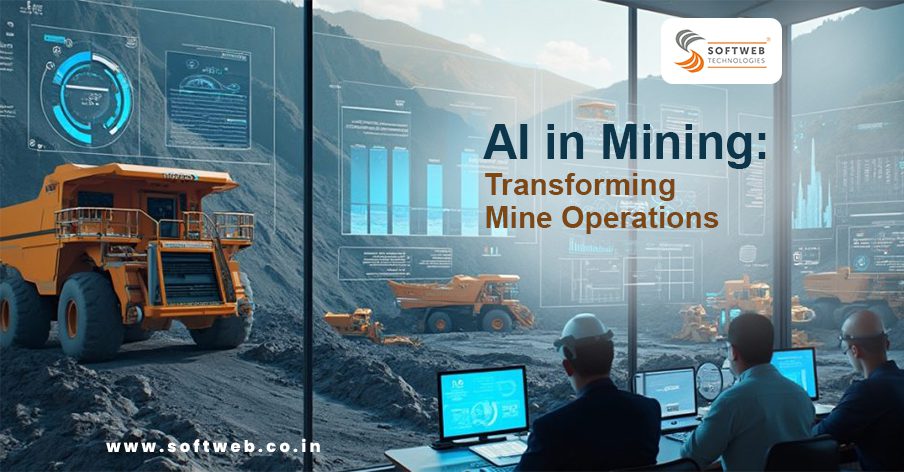
Mining, one of the oldest pillars of human development, is undergoing a profound shift. As demand rises for minerals that power clean energy, EVs, and digital manufacturing, mining companies must evolve beyond traditional methods. Artificial Intelligence – AI in Mining has emerged as a catalyst—reshaping exploration, extraction, safety, and sustainability across the mining value chain.
With the rise of connected mining ecosystems, the integration of IoT in mining operations, and data-driven decision-making, AI is now at the centre of the future of smart mines.
The Role of AI in Smart Mining
Modern mines are deeply instrumented with sensors, machines, and digital systems. Yet the true transformation begins when AI interprets this information, turning raw numbers into actionable insights.
AI enables mining teams to:
* Understand patterns across vast datasets
* Respond faster to operational shifts
* Predict events before they occur
* Optimise processes across drilling, hauling, crushing, and processing
This shift from reactive to proactive decision-making forms the core of mining digital transformation.
AI in Mining Exploration
One of the biggest advantages of AI is its ability to analyse complex geological data with pinpoint accuracy. Machine learning in mining enables geologists to identify promising mineral zones without relying solely on manual interpretation.
AI enhances exploration by:
* Analysing soil chemistry, survey results, and geospatial imagery
* Predicting mineral-rich zones with higher accuracy
* Reducing unnecessary drilling and land disturbance
* Accelerating the path from discovery to extraction
These capabilities support sustainable mining technologies by minimising environmental impact.
Predictive Maintenance
Mining equipment operates in some of the harshest conditions on earth. With AI-enabled predictive maintenance, companies can detect failures before they happen.
AI-driven maintenance helps:
* Analyse vibration, temperature, and load data
* Forecast component failures weeks in advance
* Reduce breakdown-related downtime
* Extend equipment lifespan
* Improve miner safety
Predictive analytics for mining has quickly become one of the strongest ROI drivers for smart mines.
Energy Optimisation and Low-Carbon Mining
As the world pushes toward net-zero commitments, energy-efficient mining operations are becoming essential. AI identifies inefficiencies that are often invisible to the human eye.
AI supports sustainable mining by:
* Optimising power use across processing plants
* Reducing fuel consumption in fleets
* Improving water and reagent usage
* Lowering greenhouse gas emissions
* Minimising operational waste
AI is also increasingly used in digital twins in mining to simulate process flows and test energy strategies.
Automation
Autonomous mining vehicles are becoming a defining feature of Mining 4.0. AI enables drills, haul trucks, and loaders to navigate complex terrains and execute tasks with high precision.
Benefits of mining automation include:
* Safer operations in high-risk zones
* Reduced human error
* Streamlined, repetitive tasks
* Higher throughput and consistent performance
* Lower operational costs
These AIoT-enabled systems form the backbone of connected mining ecosystems.
Environmental Monitoring Powered by AI
Environmental risks can escalate quickly in mining environments. AI enhances environmental monitoring in mines by analysing geotechnical and meteorological data to predict hazards.
AI-driven environmental intelligence offers:
* Early warning for landslides and ground shifts
* Real-time visibility into air quality and emissions
* Better water and waste management
* Reduced ecological footprint
* Improved compliance with environmental regulations
Machine learning and acoustic monitoring are also being adopted for habitat protection and noise control.
Challenges in Adopting AI in Mining
Despite its potential, the road to AI adoption includes notable challenges.
Key hurdles include:
* High initial investment in sensors, cloud platforms, AI infrastructure
* Data quality issues due to legacy systems and inconsistent data capture
* Workforce skill gaps requiring digital upskilling and training
* Resistance to change in organisations used to manual operations
* Integration complexity with existing OEM systems and mine-specific workflows
However, mining companies that overcome these challenges gain a lasting competitive advantage through enhanced efficiency, safety, and resilience.
How MiningPro Implements AI in Mining
MiningPro integrates AI into core mining workflows, enabling companies to unlock the full potential of smart mining technologies.
1. AI for Operational Intelligence
MiningPro processes real-time data from fleets, haul roads, conveyors, and sensors to deliver insights that enhance mine planning, cycle times, and production performance.
2. Predictive Maintenance & Asset Health
Using machine learning and IoT in mining operations, MiningPro predicts equipment failures, alerts maintenance teams, and minimises costly downtime.
3. Advanced Safety Intelligence
MiningPro applies AI-driven video analytics and behaviour detection to identify unsafe actions, fatigue indicators, and high-risk scenarios—strengthening miner safety.
4. Precision Mining Through Data Analytics
The platform analyses geological and operational datasets to support optimal drilling, blasting, and extraction strategies, improving resource recovery and reducing waste.
5. Environmental & Compliance Monitoring
AI modules track air quality, emissions, water usage, and noise levels, providing early warnings for environmental risks and ensuring adherence to sustainability standards.
6. Unified Digital Mine Control Centre
All insights are consolidated into a single, intelligent dashboard, enabling supervisors to manage assets, safety, and production within a connected, data-driven ecosystem.
MiningPro brings the power of AI, IoT, and automation together—helping mines operate smarter, safer, and more sustainably.

How a Multi-Unit Tea Blender in Assam Eliminated Blend Traceability Gaps with PACE360 ERP
A leading tea blending company in Assam adopted PACE360 to unify procurement, blending, warehouse management, [...]
Jun

How a Packet Tea Manufacturer in West Bengal Scaled Distribution with PACE360 ERP
See how a leading yarn manufacturer moved beyond traditional procure-to-pay software to CVSS — Softweb’s [...]
Jun
The Future of Coal Supply Chain Management Through Automation & Innovation
See how a leading yarn manufacturer moved beyond traditional procure-to-pay software to CVSS — Softweb’s [...]
Jun

Beyond Procure-to-Pay: How a Leading Yarn Manufacturer Upgraded to CVSS and Cut Procurement Lead Time by 60%
See how a leading yarn manufacturer moved beyond traditional procure-to-pay software to CVSS — Softweb’s [...]
May
Beyond Fleet Tracking: Why Smart Iron Ore Mining Will Shape the Future of India’s Steel Industry
Discover how MiningPro by Softweb Technologies enables smarter, connected, and data-driven smart iron ore mining [...]
May

Blueeye in Kenya: Mara Coffee’s Digital Transformation Strategy for Multi-Farm Workforce Management
Mara Coffee, Kenya is transforming plantation workforce management through digital attendance tracking, productivity monitoring, payroll [...]
May
Why Cement Companies Need Smart Limestone Mining
Understand the nuances of Limestone Mining and How IoT, Fleet management and other Digital Mining [...]
May
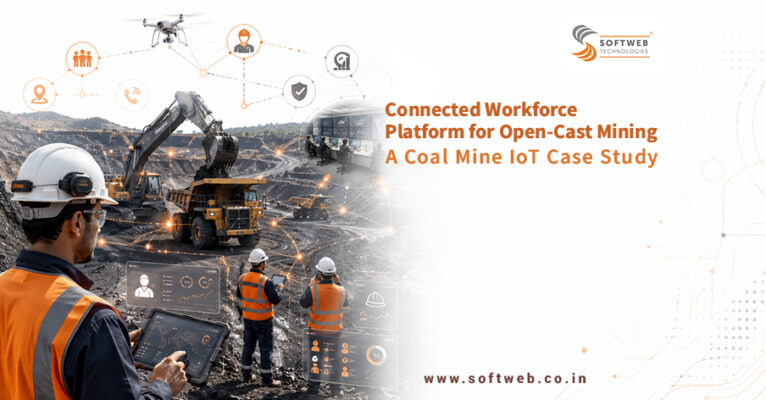
Connected Workforce Platform for Open-Cast Mining: A Coal Mine IoT Case Study
Discover how Softweb Technologies deployed a real-time connected workforce IoT platform for open-cast coal mining [...]
May
